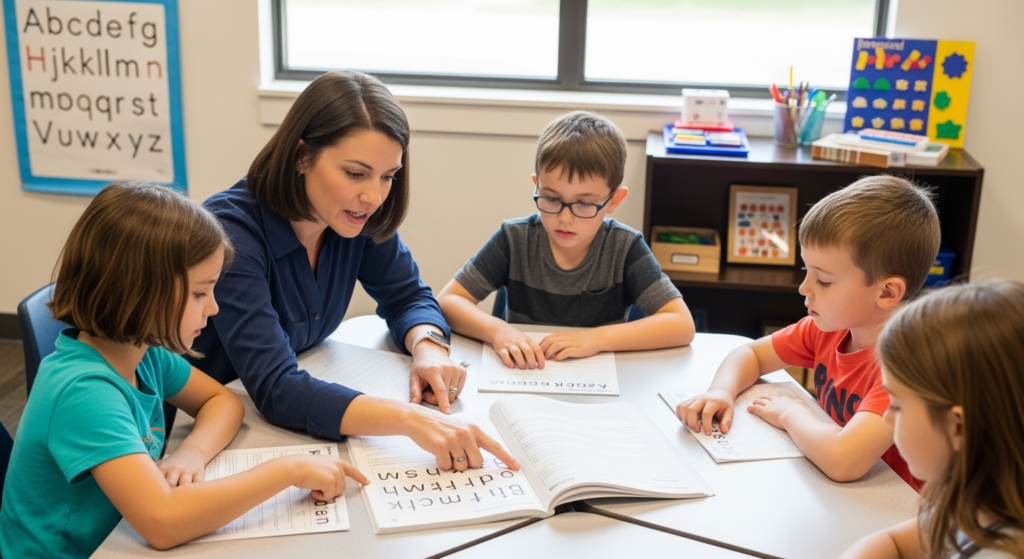
I remember the mix of hope and confusion when I first started looking for reliable dyslexia support for a child in our neighborhood. If you’re searching for Dyslexia Education Lawrenceville GA, you’re not alone. Many families in Gwinnett County want clear, local options and evidence-based help. For context on how widespread reading challenges are and why early screening matters, the U.S. Department of Education offers straightforward national data and guidance that can help families make informed decisions when looking for local services.
Why focused dyslexia education matters in this area
In the city and surrounding towns, classrooms are growing more diverse and the demand for tailored literacy instruction is rising. Dyslexia is a common learning difference that affects reading, spelling, and sometimes writing and processing speed. Without targeted support, children who have dyslexia can fall behind, lose confidence, and develop avoidable anxiety about school. The good news is that with the right screening, structured instruction, and accommodations, most students make meaningful progress.
How to recognize signs early
Early recognition changes everything. Children don’t need to “catch up” with catch-up programs alone; they often need instruction that matches how their brains learn language. Watch for patterns rather than single issues: a child might reverse letters in early writing, struggle with decoding unfamiliar words, read slowly, or avoid reading aloud. Older students may have trouble with spelling, reading comprehension, or keeping pace with classroom reading demands even though they’re bright in other subjects.
Common signs by age group
Understanding the typical signs can help you decide whether to request screening or an evaluation. Signs can look different at each stage:
- Preschool to early kindergarten: delayed speech, trouble learning letter names or sounds, difficulty rhyming.
- Elementary school: slow or inaccurate reading, difficulty decoding, inconsistent spelling, difficulty learning sight words.
- Middle and high school: slow reading rate, weak comprehension under time pressure, avoidance of reading, trouble learning foreign languages.
What screening and evaluation look like in Lawrenceville
Screening is a short set of tasks that flags a student who may need more comprehensive testing. An evaluation digs deeper with standardized tests of phonological awareness, word reading, fluency, and comprehension. In many parts of the state, parents can request school-based screening through the local school district, or they can pursue independent assessments from licensed professionals or qualified tutors with training in dyslexia-specific assessments.
School-based options versus private assessments
School evaluations may lead to formal supports like an IEP or a 504 plan. Private assessments can be useful in cases where schools are slower to act or when a family prefers a second opinion. Either route should lead to a clear plan: pinpointed goals, recommended interventions, and suggested classroom accommodations. Make sure any evaluation you use identifies strengths as well as areas of need so interventions build on what the student already does well.
Effective instructional approaches
Not every reading program is created equal. The most reliable results come from structured literacy approaches that are explicit, sequential, cumulative, and multisensory. Programs that follow Orton-Gillingham principles or are described as structured literacy have strong research backing for students with dyslexia. These methods emphasize phonemic awareness, phonics, vocabulary, fluency, and comprehension in an integrated way.
Key elements to look for in a program
When evaluating local programs or tutors, prioritize these qualities:
- Structured, explicit instruction in sound-symbol relationships and decoding.
- Multisensory techniques that engage visual, auditory, and kinesthetic pathways.
- Regular progress monitoring so instruction is adjusted based on data.
- Training and certification in dyslexia-specific methods for instructors.
Actionable steps parents can take right now
When you’re unsure where to begin, follow a few practical steps that move the situation forward without overwhelming your family. These actions will help you get clarity and start targeted work quickly.
- Request a screening through your child’s school or schedule an independent screening if you want faster answers.
- Ask about structured literacy or Orton-Gillingham-based programs and whether instructors have specialized training.
- Set short-term reading goals and ask for a progress plan that includes how often you’ll see measurable change.
- Explore assistive technology like text-to-speech or audiobooks to support reading access while instruction continues.
Choosing local services in Lawrenceville and Gwinnett County
Local availability matters. Many families prefer centers or tutors nearby so sessions are easier to fit into a busy schedule. When searching in Lawrenceville GA, look at proximity to downtown, accessibility from major roads, and whether providers serve nearby neighborhoods and towns. Teletherapy and remote tutoring have grown in the past few years and remain a helpful option for families who need scheduling flexibility or for students who do well with virtual sessions.
Questions to ask providers
Talk to prospective tutors or centers and ask specific, evidence-focused questions. Here are the most helpful ones to have ready during your first call:
- What assessment tools do you use, and how will you measure progress?
- Which structured literacy methods do you follow, and what formal training do your staff have?
- How long are typical sessions, and how often will my child need to attend?
- Do you offer teletherapy or hybrid options if we need remote sessions?
How intervention looks across a school year
Effective dyslexia education is not a single quick fix. Over a school year, you should expect regular, intensive instruction—often multiple times per week—paired with measurable gains. Progress monitoring every 6–8 weeks helps ensure instruction is working and allows for adjustments. Family involvement is also crucial; simple daily practice that complements tutoring sessions can accelerate gains and build confidence.
Accommodations that make schoolwork fairer
Accommodations don’t lower expectations; they level the playing field while a student builds skill. Examples include additional time on tests, reading aloud options, alternative assignments, and access to audiobooks or text-to-speech. These supports can be arranged through school plans and are especially useful during the period when targeted instruction is underway.
Assistive technology and recent trends
Technology is opening new doors for students with dyslexia. Text-to-speech software, audiobooks, and speech-to-text tools help students access grade-level content while they improve decoding skills. Another trend is increased focus on universal screening in early grades so educators can catch risk earlier. Remote delivery of services has also matured, allowing families outside of immediate neighborhoods to access specialized instructors who might not be local.
How to compare cost, accessibility, and outcomes
Affordability and outcomes are both important. Fees can vary widely depending on whether services are school-based, private, or offered through a nonprofit. When comparing options, don’t focus only on hourly rates. Ask about typical progress benchmarks, cancellation policies, and whether the provider helps with school-based plans. A higher hourly rate that leads to faster, sustained improvement can be a better investment than many hours of less effective instruction.
Working with your child’s school team
Partnerships between families and schools produce the best results. If your child receives outside tutoring, share assessment reports and progress data with classroom teachers so they can reinforce skills and provide accommodations. If the school conducts an evaluation and recommends an IEP or 504 plan, collaborate with the team to ensure goals are specific, measurable, and tied to structured literacy approaches.
Tips for effective school collaborations
Bring assessment summaries and suggested strategies to meetings, request concrete classroom supports, and ask for timelines and checkpoints. Keep clear records of communications and any assessments you commission privately so the school team can incorporate them when appropriate.
Local supports and community connections
Lawrenceville benefits from a network of schools, libraries, and community organizations that host reading programs and workshops. Public libraries often provide access to audiobooks and literacy resources, while community centers can be a route to affordable or sliding-scale tutoring. Networking with other parents through local groups can reveal which programs and providers deliver consistent results in this area.
When to pursue a formal diagnosis
A formal diagnosis often follows a pattern: initial screening suggests risk, a more detailed evaluation identifies a specific profile, and parents and schools use that information to set targeted goals and supports. Diagnosis helps secure formal accommodations at school and guide instruction. If your child is making slow or no progress despite extra help, consider pursuing a full assessment so you can define the next steps with data.
Measuring progress and setting realistic expectations
Real progress is steady, measurable, and connected to clear goals. Improvements may first show in decoding speed, then fluency, and later in comprehension. Celebrate small wins—gaining confidence in reading aloud, completing a book, or improving spelling accuracy. Over time, the goal is independent reading and learning access, not just passing a particular grade-level test.
Final checklist to get started
Use this short checklist as you begin the search for services in Lawrenceville and nearby neighborhoods. It helps you move from uncertainty to action.
- Request screening through the school or hire an independent screener.
- Confirm the instructional approach is structured literacy and that staff have relevant training.
- Ask for a written plan with measurable goals and a schedule of progress checks.
- Explore assistive technology options to support learning while interventions continue.
Finding the right match takes time, but the right supports can change a child’s trajectory. If you’re ready to take the next step, consider providers who combine evidence-based instruction, clear progress monitoring, and strong communication with families and schools. For families in Lawrenceville GA who want an experienced team that focuses on measurable literacy growth and practical classroom supports, Sage School is available to discuss options and next steps.