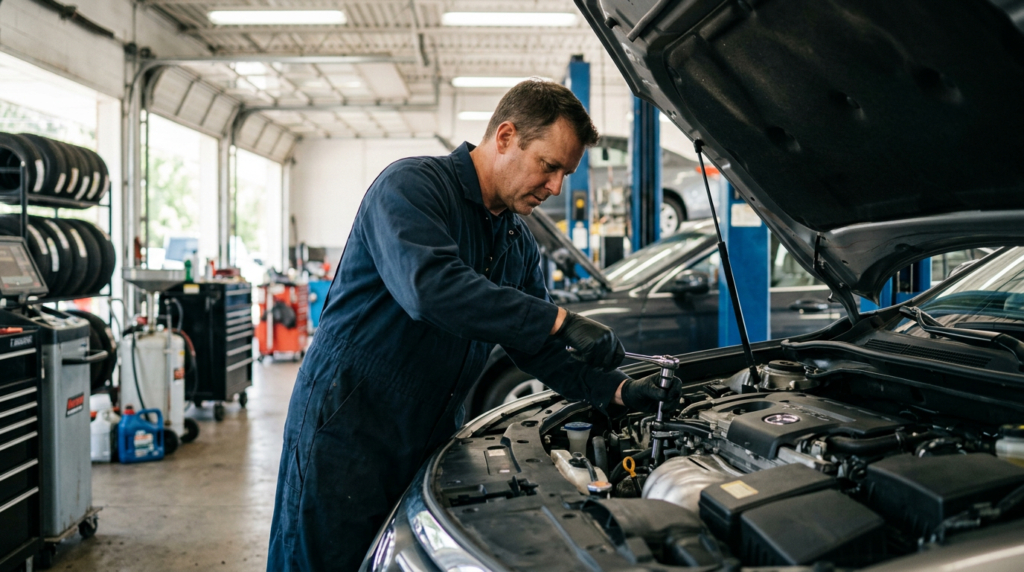
Quick answer: Choose a trustworthy mechanic in Buford, GA by looking for clear communication, written estimates, and a shop that explains test results before recommending repairs. Ask about warranty terms, how they handle parts options (OEM vs aftermarket), and whether they’ll prioritize safety issues first. A good mechanic documents findings, answers questions without pressure, and gives you options based on budget and long-term reliability.
What Good Shops Do Differently
A reliable shop acts like a translator between you and the car. They’ll start with your symptoms, confirm them with a road test or scan, and then explain what they found in plain language. If you’re searching for a mechanic Buford GA, pay attention to how they handle your first call: do they ask clarifying questions, explain the next diagnostic step, and set expectations on timing?
Written estimates matter. You want line items that separate diagnosis, labor, parts, shop supplies, and taxes so you can compare apples to apples. A trustworthy mechanic will also tell you what’s urgent (brakes, steering, overheating) versus what can wait (minor seepage, worn but safe tires) and will explain the risk of delaying.
Good shops also document. That could be notes on measured brake pad thickness, battery test results, or a photo of a leaking hose. Documentation reduces misunderstandings and helps you make decisions confidently.
Verification Checklist for Buford and Georgia
Use this quick checklist before you approve work:
Confirm the business is real and current: Look up the shop name in the Georgia Secretary of State business search (Corporations Division) to confirm the registered entity and status. If the name doesn’t match what’s on the estimate, ask who is actually billing you.
Read reviews for patterns, not just stars: Skim the most recent 10–20 reviews and look for repeated themes (clear estimates, communication, comebacks handled). Be cautious of a sudden burst of many short, generic reviews in a tight time window, or a long history with no detail. One or two bad reviews aren’t unusual; consistent complaints about surprise charges or unresolved repeat problems matter more.
Ask for these items on the written estimate: line-item parts and labor, the labor hours billed for each job, the parts brand/grade (OEM, OEM-equivalent, aftermarket), shop fees, taxes, and any diagnostic fee. If a recommendation is based on a measurement (brakes, battery, alignment), ask that the measurement be written down.
Questions to Ask Before You Approve Repairs
Asking a few direct questions can save you money and frustration. Start with: “What tests did you run to confirm the cause?” Replacing parts based only on a code (like a check-engine light) can miss the real problem, since codes often point to a system, not a specific failed part.
Next ask: “What are my options for parts?” Many repairs can be done with OEM, OEM-equivalent, or aftermarket parts. OEM may cost more but can fit better and last longer for certain components; quality aftermarket can be perfectly fine for others. A straightforward mechanic will explain the trade-offs instead of pushing the most expensive choice.
Also ask about warranties in plain terms: what’s covered (parts, labor, both), for how long, and what could void it (like ignoring a related leak or overheating issue). As an industry example, a common range is around 12 months/12,000 miles to longer depending on the shop and part. Request the shop’s exact written warranty terms and keep a copy before authorizing work.
Red Flags and a Simple Decision Flow
Pressure tactics are the biggest red flag. If you feel rushed to approve a long list of repairs without clear explanations, slow down. Another warning sign is vague language like “you need a tune-up” without specifying what that includes (spark plugs, filters, fuel service, ignition components) and why it’s needed.
When to get a second opinion: do it for high-dollar repairs, any recommendation that doesn’t come with test results, or if the shop can’t explain why a part failed. Ask for printouts (scan results, battery/charging test), photos, and measurements (brake pad thickness, rotor runout, tire tread depth) so the next shop can review the same evidence.
When it’s unsafe to drive: don’t keep driving if you have a sinking brake pedal, grinding brakes, steering that pulls hard or feels loose, overheating/steam, a strong fuel smell, or a flashing check-engine light with severe shaking. The next step is to stop, arrange a tow if needed, and request documented findings before approving major work.
If you want an in-person conversation about your symptoms, bring your notes and ask for a written estimate and documented test results; Team Ryan Automotive is one local option to contact for help.