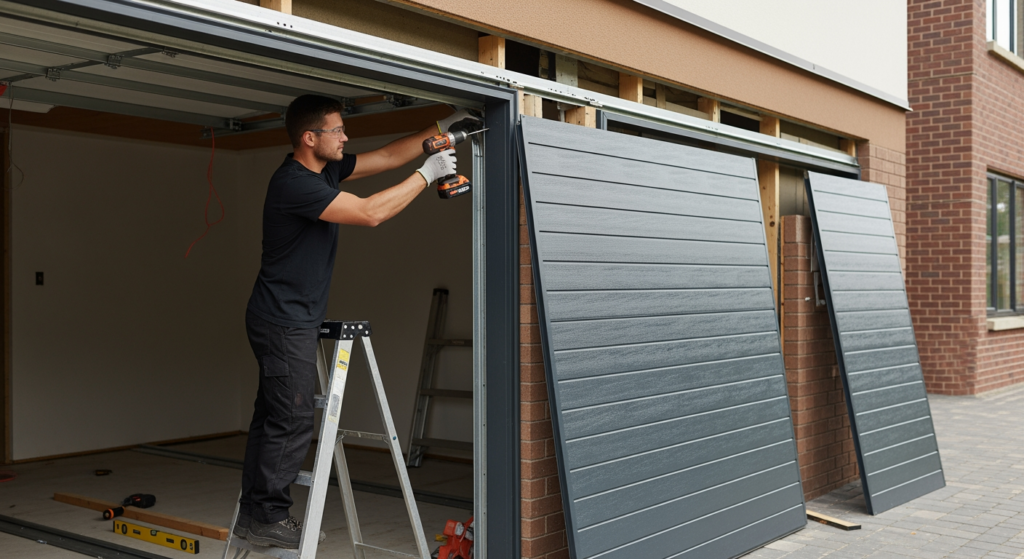
When my garage door acts up, I look for clear answers and fast help, which is why I started this guide about garage door repair. I also check safety guidance from trusted agencies to make smart decisions before touching any hardware, like reviewing safety tips from the U.S. Consumer Product Safety Commission at CPSC. Over the years I’ve learned that a little knowledge can save time and keep a tiny problem from turning into an expensive emergency.
Why timely garage door repair matters
A garage door is one of the biggest moving parts on a house. When it’s working, you barely notice it. When it stops, it affects your day — and sometimes your safety. Delaying repairs puts stress on the opener, the springs, and the tracks, and can quickly multiply repair costs. I’ve seen simple spring or sensor fixes grow into full opener replacements because homeowners waited too long.
Beyond convenience, there’s safety and energy to consider. A damaged door can fail unexpectedly, and a poorly sealed door leaks air, raising energy bills. With weather swings and more people working from home, keeping your garage door in shape helps protect vehicles, tools, and the entry to your home.
Common garage door problems I see
1. Door won’t open or close
When a door refuses to move, it’s often an opener issue, power problem, or a blocked safety sensor. Sometimes the remote battery is dead, or the opener lost power. Other times the photo-eye sensors are misaligned or covered in dirt. Before assuming the worst, check basics: power, batteries, and sensor alignment.
2. Loud noises and grinding
Creaks, groans, and grinding usually point to worn rollers, loose hardware, or lack of lubrication. Metal-on-metal contact can damage tracks and rollers if left unchecked. Regular lubrication and tightening of fasteners prevents this slow breakdown.
3. Door off its tracks or uneven
A door that tracks out of alignment or hangs unevenly is a safety issue. This can be caused by damaged rollers, bent tracks, or broken springs. Because these components are under tension, this is one of the problems I always recommend calling a professional for instead of trying a DIY fix.
Quick troubleshooting you can try before calling
- Check power and remotes: Make sure the opener is plugged in, breakers are on, and remote batteries are fresh.
- Inspect safety sensors: Clear dirt, and visually confirm that the photo-eye lights face each other and show steady light.
- Look for obvious damage: Bent tracks, detached cables, or missing hardware indicate you should stop and call for help.
These steps often solve the simplest problems and help you decide whether the issue is an easy fix or needs professional attention.
How professionals diagnose and fix common issues
A trained technician starts with a visual inspection and then tests the opener’s electrical components, the springs’ tension, the rollers’ condition, and the alignment of the tracks and sensors. Repairs can include replacing springs or rollers, realigning tracks and sensors, lubricating moving parts, or installing a new opener when the old unit is beyond repair.
One safe rule to remember: torsion springs and cables hold significant tension. I don’t recommend attempting spring replacement; that’s a job for a pro with the right tools and training.
What to expect from a quality service visit
When I call a repair service, I want a clear explanation of the problem, a transparent estimate, and an honest timeline. A good technician will show the worn parts, explain options (repair vs. replace), and review safety checks they’ll perform. They should also offer maintenance tips to prevent future trips back.
How to choose the right repair professional
- Look for licensed and insured technicians who will take responsibility for their work.
- Ask about experience with your door type and the brands they service.
- Request a written estimate and clear warranty terms for parts and labor.
- Check recent reviews and ask about response time for emergency calls.
Choosing someone local who understands the community’s weather patterns and building styles makes follow-up visits easier and faster. I’ve found that small, responsive teams often outpace larger chains when it comes to same-day service and personalized care.
Maintenance habits that extend your door’s life
Simple seasonal checks go a long way. I recommend the following routine every spring and fall: clean and lubricate rollers and hinges, test the auto-reverse safety feature, tighten loose bolts, and check the balance by disconnecting the opener and manually lifting the door halfway — it should stay put. If it doesn’t, springs may need adjustment.
Keeping weatherstripping in good condition also protects against drafts and water intrusion. If you notice cracked or missing seals at the bottom of the door, have them replaced to improve insulation and keep pests out.
Trending topics shaping garage door repair today
Two clear trends are changing how I recommend repairs and upgrades. First, smart garage door openers are becoming standard. They add convenience and security by letting you monitor and control your door from a phone. These systems also add features like activity logs and geofencing to automatically open or close the door based on your location.
Second, homeowners are investing in energy-smart upgrades. Insulated doors and tighter seals help reduce heating and cooling costs in attached garages. With rising interest in whole-home efficiency, these upgrades pay off over time.
Common questions I get and short answers
How much should a basic repair cost
Repair costs vary depending on parts and labor, but a minor repair like sensor alignment or track tightening is generally much cheaper than replacing springs or an opener. Always get an estimate before work begins and ask what warranty covers.
Can I replace a garage door spring myself
No. Garage door springs are under high tension and can cause serious injury if handled improperly. This is a case where professional service is the safest route.
How often should I schedule maintenance
I recommend a professional inspection at least once a year, with homeowner checks each season. Regular maintenance catches wear early and extends the life of your door and opener.
Local trends and statistics that matter
In recent years, the focus on home security and energy efficiency has pushed more homeowners to upgrade their garage systems. According to the U.S. Census, a substantial portion of American homes include garages, which means millions of households rely on these systems every day — making maintenance and safety a priority for the community. For homeowners, that often translates into choosing repairs that add security features, energy savings, or smart connectivity.
Emergency situations and what to do
If your garage door becomes stuck and you suspect broken springs, cables, or severe structural damage, clear the area, keep people and pets away, and call a professional right away. Avoid trying to force the door open; that can harm the opener and create a safety hazard. If the opener runs but the door won’t move, disconnect the opener and inspect for obvious obstructions. For any sign of snapped springs or frayed cables, stop and call for help.
Final thoughts and next steps
When a garage door problem appears, acting quickly and smartly prevents small issues from becoming big headaches. I always start with basic checks — power, remotes, and sensors — then move to scheduling a trained technician for anything involving springs, cables, or structural damage. Regular maintenance, simple seasonal checks, and considering upgrades like smart openers or better insulation can reduce emergency calls and give real peace of mind in the long run.
If you’re ready to schedule a repair or need an expert opinion for your door, contact AA Garage Door for reliable service in the city and surrounding neighborhoods.