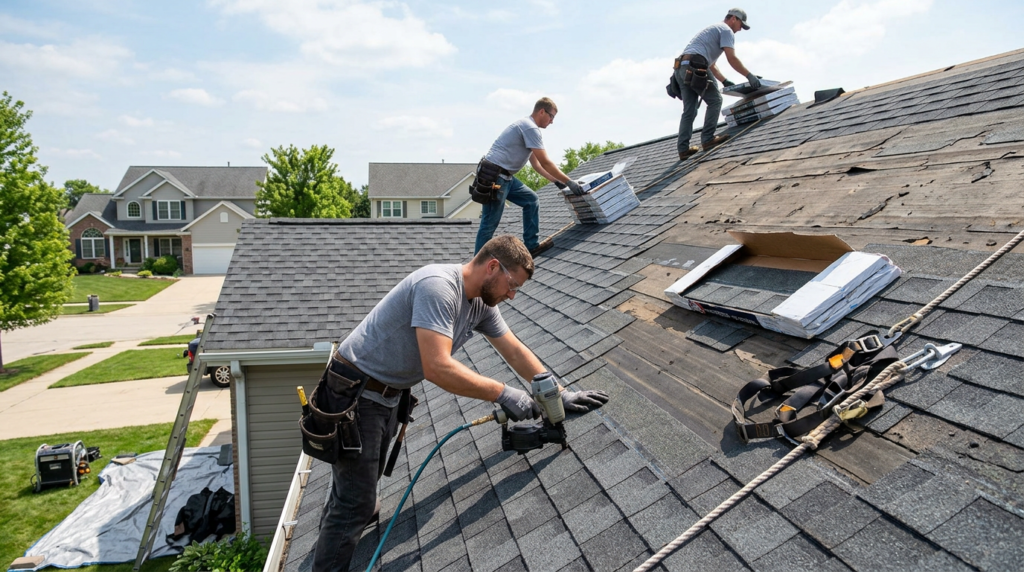
Quick answer: The most-missed roof repair warning signs are the subtle ones: a few shingles that look slightly lifted, granules collecting in gutters, small water stains that come and go, and flashing that’s starting to separate around chimneys or vents. These issues often show up long before a major leak. Catching them early usually means a smaller repair instead of widespread sheathing, insulation, or interior damage.
Early Clues You Can Spot From the Ground
You don’t need to climb a ladder to catch many problems early. From the driveway, look for shingles that are curling at the edges, sitting unevenly, or missing their sealing strip so they flutter in wind. Pay attention to roof “lines” too—sags or dips can hint at moisture damage in the decking below, especially if the area looks darker or stays damp longer after rain.
Gutters and downspouts tell a story. If you’re finding lots of sandy granules at downspout exits or in gutter corners, the shingle surface may be wearing out. Also watch for shingle fragments after a storm and for gutters pulling away from the fascia, which can indicate water overflow or hidden rot at the roof edge. If you want a quick checklist to compare against what you’re seeing, this guide to roof repair warning signs is a handy reference.
Flashing is another common “miss.” Metal at valleys, chimneys, skylights, and wall intersections should lie flat and tight. If you can see gaps, lifted corners, rust, or old smeared sealant, water can sneak in even if the shingles look fine.
Indoor Signs That Point Back to the Roof
Inside, the classic clue is a water stain on a ceiling, but the timing matters. A stain that grows after wind-driven rain often points to flashing or a roof-to-wall junction. A stain that shows up after snow or ice can suggest ice damming at the eaves, where meltwater backs up under shingles.
Check the attic if you can do so safely. Look for darkened wood, damp insulation, or nails that look rusty or have “frost” on them in cold weather—condensation can mimic a leak, but both still need attention. Wet insulation can lose insulating value while it’s damp and may dry unevenly, so even small roof leaks can have comfort and energy impacts if they persist (see U.S. DOE guidance on insulation and moisture: https://www.energy.gov/energysaver/insulation).
Monitor vs Schedule Soon vs Call Now
Use this quick triage to decide what to do next. It won’t replace an inspection, but it helps you avoid both panic and procrastination.
| Level | What it can look like |
|---|---|
| Monitor | One or two granule “sprinkles” after a storm; a single shingle tab that looks slightly raised but intact; minor gutter overflow only during heavy downpours; a small ceiling mark that hasn’t changed for months. |
| Schedule soon | Recurring small stain after certain storms; several shingles cracked/curling in one area; flashing sealant failing or metal edges lifting; persistent musty attic smell or damp insulation spots. |
| Call now | Active dripping or water running down framing; daylight visible through the roof deck; a sagging roof section or spongy decking feel; widespread shingle loss after wind or hail. |
What We Check in a Roof Repair Evaluation
A solid evaluation is more than a quick glance at shingles. A typical roof repair check starts with a walkaround to note visible shingle damage, soft-looking roof lines, and gutter conditions, then moves to the most leak-prone details: valleys, chimneys, skylights, step flashing where a roof meets a wall, and penetrations like plumbing vents and fan caps.
If attic access is available, the next step is looking for moisture tracks, darkened decking, damp insulation, and ventilation red flags (blocked soffits, disconnected bath fans, or short-circuiting between intake and exhaust). Gutters, drip edge, and fascia edges get checked too, since water that overshoots or backs up can contribute to rot at the roof edge.
Ask for clear photo documentation and a plain-language explanation of what’s failing, what’s still serviceable, and what repair options make sense (for example, replacing a few shingles and reworking flashing versus opening a section to address damaged decking). That way you’re not guessing what you’re paying for or what to watch afterward.
When to Call for Repair Instead of Waiting
Call for a roof repair evaluation if you see active dripping, daylight through the attic, multiple missing shingles, or flashing that has visibly pulled away. Also get eyes on it if you notice a sagging area, because that can indicate compromised decking that shouldn’t be ignored.
Many roof issues trace back to repeat offenders, but they aren’t always the only cause. Aging shingles can lose flexibility, fasteners can back out over time, and flashing details can fail if they weren’t lapped correctly or if sealants have deteriorated. Ventilation and drainage can contribute too: poor attic ventilation can trap moisture and heat, and clogged gutters or short downspouts can keep water at the eaves, raising the odds of rot at the fascia and the first few feet of roof sheathing.
If the signs are minor—one small stain, a few loose shingles, or granules showing up—schedule a check soon rather than “next season.” Small water entry can spread sideways before it drops into a room, and damp insulation can underperform while it’s wet. For help sorting out what you’re seeing and what makes sense to fix first, Tipton’s Fine-Tuned Carpentry can take a look and walk you through repair options.