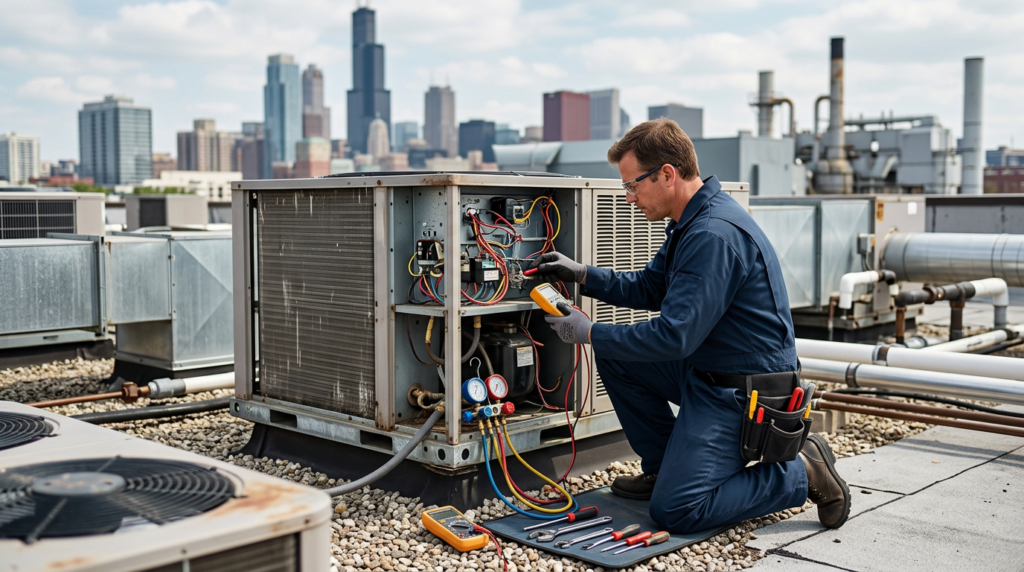
Quick answer: Commercial HVAC preventative maintenance in DuPont usually includes scheduled inspections, cleaning, testing, and small adjustments that keep rooftop units, split systems, and refrigeration equipment running efficiently. A typical visit covers filter changes, coil and drain cleaning, belt and electrical checks, thermostat and safety testing, and verifying refrigerant performance. The goal is fewer surprise breakdowns, steadier comfort, and catching wear before it turns into an expensive emergency.
What’s Typically Done During a Preventative Maintenance Visit
A standard plan for DuPont commercial HVAC preventative maintenance focuses on the parts that most often drift out of spec: airflow, heat transfer, electrical connections, and controls. Techs commonly replace or clean filters, check blower operation, inspect belts and pulleys, and confirm the unit is moving the right amount of air. Coils (evaporator and condenser) get inspected and cleaned as needed because dirty coils can drive up head pressure, reduce capacity, and shorten compressor life.
Most visits also include clearing and testing condensate drains and pans, verifying safeties (like high-pressure switches and float switches), and checking contactors, capacitors, and wiring for heat damage or pitting. You can also expect thermostat or building control checks, temperature split measurements, and a quick review of unusual noise or vibration. For refrigeration, common tasks include checking door gaskets, cleaning condenser coils, verifying defrost operation, and confirming case temperatures are stable.
Typical PM checklist (examples)
Rooftop units (RTUs)
Inspect/test: supply/return temps and temperature split, blower and condenser fan amps, contactors/capacitors condition, safeties (high/low pressure where applicable), economizer damper movement and outside-air sensor readings, gas heat ignition/flame signal (if equipped).
Clean/replace as needed: filters, condenser/evaporator coil surfaces, drain pan and condensate line, belts (or adjust tension), outdoor-air intake screens.
Split systems
Inspect/test: refrigerant performance indicators (superheat/subcooling where access and metering device allow), compressor/fan amp draw, line-set insulation condition, thermostat staging, electrical connections and disconnect condition.
Clean/replace as needed: indoor filter(s), indoor coil face and blower wheel (if dirty), outdoor coil, condensate trap/line.
Commercial refrigeration (walk-ins/cases)
Inspect/test: box/case temperatures, defrost initiation/termination behavior, fan motor operation, door closer/gasket seal, control settings and sensor placement, unusual ice patterns that suggest airflow or refrigerant issues.
Clean/replace as needed: condenser coil, drain line/heater components (as applicable), door gaskets, clogged airflow grilles.
How Often Should Maintenance Be Scheduled?
Many commercial sites do maintenance twice a year—once before cooling season and once before heating season—because that lines up with the heaviest run times. Higher-use buildings, kitchens, dusty environments, or sites with refrigeration often benefit from quarterly visits since filters and coils load up faster and small issues show up sooner.
A practical way to set frequency is to match it to risk: if a failure would shut down sales, spoil product, or create tenant complaints, more frequent checks are usually cheaper than an after-hours emergency call. If your equipment is older or has a history of tripped safeties, nuisance alarms, or inconsistent temperatures, tighter intervals help catch the root cause before it becomes a compressor or heat exchanger problem.
Problems Preventative Maintenance Can Catch Early
Preventative maintenance is less about “tune-ups” and more about spotting patterns: rising amp draw, weak capacitors, pitted contactors, low airflow from clogged filters, and failing fan motors that start squealing or overheating. It also helps catch refrigerant issues indirectly—like icing, low suction pressure symptoms, oil staining, or abnormal superheat/subcooling readings—before the system loses capacity on the hottest day.
On rooftop units, techs often find economizer dampers stuck open/closed, cracked belts, loose set screws, or sensors that drift and cause short cycling. On furnaces, they may spot cracked heat exchangers, rollout issues, or flame-sensing problems that cause lockouts. Finding these early can reduce the chance that a minor fault turns into a major component failure.
How to Choose a Maintenance Plan That Fits Your Building
Ask for a checklist that matches your actual equipment (RTUs, VAVs, split systems, makeup air, walk-ins) and clarifies what’s included versus billable repairs. A good plan documents readings and observations so you can see trends over time, not just a “passed/failed” visit. Also confirm how the provider handles priority scheduling, after-hours response, and parts recommendations so you can budget for likely wear items like belts, filters, capacitors, and contactors.
What to ask your provider to document (and what triggers a recommendation)
Ask for a baseline report each visit that includes: compressor and fan amp draw (flagged if it’s consistently above nameplate or trending upward), static pressure across the air handler/RTU (flagged if it’s above the equipment’s rated external static or jumps versus prior visits), temperature split across the coil (flagged if it’s unusually low/high for the conditions and unchanged by filter/coil cleaning), superheat/subcooling (flagged if outside the manufacturer’s charging targets for the metering device and ambient conditions), and economizer operation (damper stroke, sensor readings, and whether it locks out/opens when it should). Also ask what specific thresholds they use for “monitor” versus “repair now,” and whether those thresholds come from the unit’s nameplate/manual, control sequence, or measured trends.
A contractor can review your equipment list, operating hours, and comfort/uptime priorities and propose a checklist and visit frequency; ask for the documentation format up front so you can compare providers consistently. If you’re looking for a local company to contact about this in DuPont, Nextech is one option to consider.