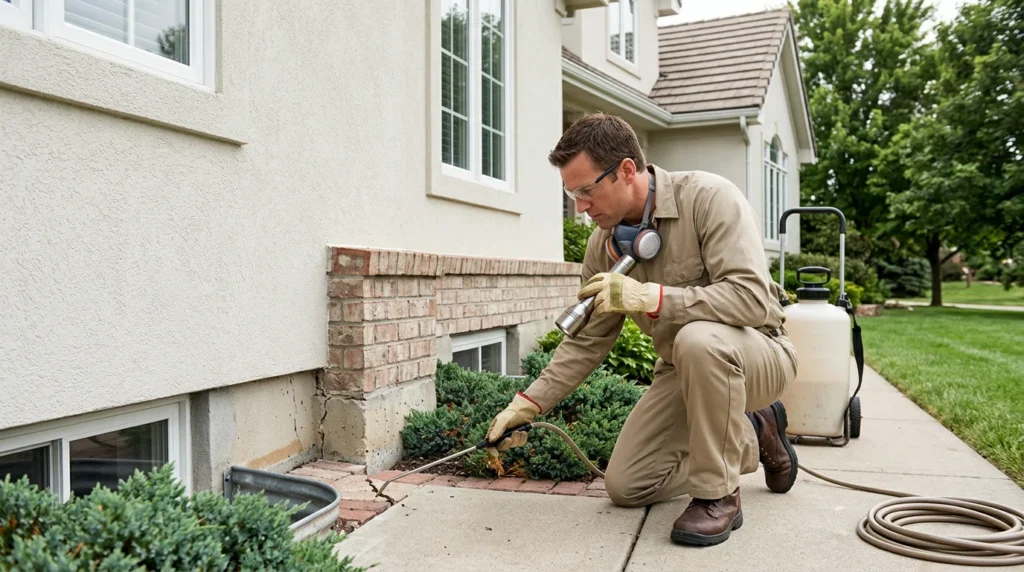
Quick answer: Pest exterminator services generally include pest identification, a home inspection for entry points and nesting areas, a targeted treatment plan, and prevention steps to reduce repeat activity. Follow-up and monitoring may be offered, but the schedule and guarantees vary by pest, company, and the home’s conditions. A good provider explains what they’re treating, why that method fits the pest, and what you should do before and after the visit.
What Exterminator Services Commonly Cover
This stays general because methods and visit flow vary by pest, company practices, season, and the home’s layout. Most services still revolve around the same core pieces:
Inspection
- Confirming the pest (or narrowing it down) based on what you’ve seen and where activity is showing up.
- Checking likely hot spots such as kitchens/pantries, plumbing penetrations under sinks, attics/crawlspaces, garage thresholds, and exterior gaps around utility lines.
- Looking for contributing conditions like moisture, food sources, cluttered storage, or dense landscaping against the house.
Treatment
- Selecting a method that fits the pest and location, which can look very different between ants, roaches, rodents, termites, and stinging insects.
- Applying products in targeted areas (often cracks/crevices and exterior perimeters) rather than indiscriminate spraying, depending on the situation.
- Sharing any same-day precautions (for example, keeping pets away until treated areas are dry) based on the products used.
Prevention guidance
- Pointing out entry points to seal, sanitation steps, and moisture fixes that reduce re-infestation risk.
Many pest exterminator services also include some form of follow-up option, but the timing and scope vary widely—an active infestation may need closer attention than routine prevention.
Treatment Methods You Might Hear About (And What They’re For)
Treatment selection is not one-size-fits-all. It varies by pest species, where activity is occurring, household preferences (kids/pets), and how accessible the problem areas are.
Common approaches
- Baits: Often used for ants and some roaches so the active ingredient can be carried back to hidden areas. Placement and patience matter; results can be gradual.
- Residual crack-and-crevice treatments: Frequently used along pest travel routes and harborages, especially where pests hide during the day.
- Dusts: Sometimes used in voids, attics, or other dry spaces where liquids aren’t ideal.
- Insect growth regulators: May be used in some roach or flea situations to disrupt the breeding cycle; they’re usually part of a broader plan.
- Trapping and exclusion for rodents: Many providers prioritize trapping plus sealing recommendations; bait stations may be used in some cases, depending on risk tolerance and site conditions.
- Targeted nest treatment for stinging insects: Typically focuses on locating the nest and treating at an appropriate time, with prevention steps to reduce re-nesting.
Homeowner Checklist: Before the Visit, After the Visit, and When to Call Back
Before the visit (helps the tech diagnose faster)
- Take photos of insects, droppings, mud tubes, damaged packaging, or bite marks if you can do so safely.
- Write down where/when you’re seeing activity (time of day, weather changes, rooms affected).
- Clear access to key areas: under sinks, along baseboards, behind/under appliances if possible, attic/crawlspace entry points.
- Make a pet plan: know where pets will be during treatment and until any treated areas are dry, following the technician’s instructions.
- Avoid deep cleaning right before the appointment in the exact spots you want evaluated; you don’t want to erase trails, droppings, or entry clues.
What to expect same-day vs. 1–2 weeks (varies by pest and method)
- Same-day: You may see increased activity as pests are flushed from hiding, especially with certain treatments. You should also receive basic do/don’t guidance (for example, where not to mop or spray over baits).
- Next few days: Some pests decline quickly; others are slower. Bait-based plans often take time because the goal is to impact the colony or hidden population.
- 1–2 weeks: Many situations show a clearer trend by this point, but some infestations (heavy roach activity, established rodents, termites) may require a longer plan and/or multiple visits depending on the provider’s program.
Call back if you see any of these
- No noticeable improvement after about 10–14 days for common crawling insects, especially if you followed prep instructions and didn’t disturb baits.
- New daytime roach sightings or repeated sightings in multiple rooms after the first week.
- Rodent scratching noises continuing nightly for more than a week, or fresh droppings appearing after traps were set.
- Stinging insects reappearing at the same entry hole after treatment, or increased activity near kids/pets play areas.
- Any safety concern, strong odor, or unexpected reaction you believe is connected to treatment.
Service Plans and Prevention That Reduce Repeat Problems
Ongoing service cadence and follow-up expectations vary by company, pest pressure, and the home. Many companies offer monthly, bi-monthly, or quarterly plans for general pests, while active infestations often need a tighter initial schedule. Ask what pests are included, what triggers a re-service visit, and whether follow-ups are scheduled automatically or only if you report activity.
Prevention steps that usually pay off
- Seal gaps around pipes, siding, and utility lines; add door sweeps where light shows under exterior doors.
- Fix moisture issues (drips, damp crawlspaces) that attract roaches and other pests.
- Store food in hard containers and reduce crumbs/grease film in kitchens.
- Trim vegetation off the house and keep mulch/leaves from piling against the foundation.
If you’re in Athens and want help choosing a plan and tightening up prevention around your home, Athens Exterminating is a local place to get help.